
Data Center Cabling Best Practices
Data center cabling provides the physical infrastructure that supports power delivery, network connectivity, equipment grounding, and communication throughout a data center. A well-designed cabling system helps maintain reliable performance while supporting high-density equipment, efficient airflow, scalability, and easier maintenance.
Effective data center cabling requires more than selecting the right cable. Cable pathways, power and data separation, redundancy, labeling, airflow, installation practices, and future capacity should all be considered when planning the infrastructure. This guide covers best practices for building a reliable and scalable data center cabling system.
What Is Data Center Cabling?
Data center cabling includes power, copper, fiber optic, grounding, and supporting cable infrastructure used to connect equipment and distribute power and data throughout a facility. These systems can support connections between power distribution equipment, server racks, network equipment, storage systems, and other critical infrastructure.
Because data centers require high availability and often need to scale quickly, cabling should be planned as part of the overall infrastructure rather than installed connection by connection. A structured approach makes it easier to manage capacity, maintain equipment, troubleshoot problems, and accommodate future expansion.
Using Structured Cabling Systems
Structured cabling organizes data center connections into a standardized, manageable infrastructure rather than relying on individual point-to-point cable runs. This approach can simplify moves, additions, and changes while improving cable organization, troubleshooting, airflow, and long-term scalability.
Benefits of Structured Cabling
- Reduces network downtime and maintenance costs: With a well-organized cabling system, network issues can be identified and resolved quickly, minimizing costly downtime and service disruptions.
- Enhances cable organization and aesthetics: Structured cabling prevents messy, tangled wires, making it easier to manage, maintain, and troubleshoot issues when necessary.
- Increases scalability for future network growth: The modular nature of structured cabling systems allows for easy expansion and adaptation to new technologies without extensive rework.
- Improves airflow and cooling efficiency: A properly arranged cabling system prevents airflow blockages, ensuring that cooling systems operate optimally to prevent overheating of network equipment.
- Simplifies troubleshooting and upgrades: Standardized cabling infrastructure makes it easier to trace connections and replace or upgrade components without causing major disruptions.
Choosing the Right Cable Types
Data center infrastructure relies on several types of cabling, each serving a different role across power distribution, network connectivity, communications, and grounding. Common cable categories include:
- AC/DC Power Cable: In AC current, the supply alternates direction, repeatedly changing polarity as it flows through the cables. In contrast, DC current maintains a constant polarity without switching. Explore Cablcon's DC Power cable solution (RG Flex cables).
- Copper Cable: Copper cables use electrical signals to pass data between networks. There are three main types: coaxial, unshielded twisted pair and shielded. Learn more about Cablcon's copper solutions.
- Fiber Optic Cable: Fiber optic cables contain strands of glass fibers inside an insulated casing. They are designed for long-distance, high-performance data networking and telecoms. Discover Cablcon's fiber solutions.
- Ground Cable: Ground cables connect a system directly to the earth. When high voltage or irregular electrical currents occur, the ground cable transfers electricity to the ground rather than the electrical system.
Additionally, choosing between shielded and unshielded cables depends on the environment. Shielded cables help prevent electromagnetic interference, while unshielded cables offer more flexibility and ease of installation.
Key Practices for Reliable Data Center Cabling
1. Plan cable Pathways Before Installation
Cable routing should be considered early in the data center design process instead of after racks and equipment have already been installed.
Well-planned pathways help reduce cable congestion, simplify maintenance, and leave room for future expansion. Depending on the facility design, routing may include overhead ladder rack, cable tray, underfloor pathways, raceways, or a combination of methods.
When planning cable pathways, consider:
- Current and future cable capacity
- Rack and equipment locations
- Access for maintenance
- Power and network cable routing
- Bend-radius requirements
- Physical cable protection
- Future moves, additions, and changes
Planning for future capacity at the beginning can reduce the need for disruptive cabling changes as infrastructure expands.
2. Manage Power and Data Cabling Appropriately
Power and communications cabling perform different functions and should be routed according to applicable codes, standards, equipment requirements, and manufacturer recommendations.
Separating and organizing cable pathways where appropriate can help reduce congestion, simplify troubleshooting, and limit unwanted interference between power systems and sensitive communications infrastructure.
Clearly defined pathways for power, copper data, and fiber cabling also make infrastructure easier to identify, maintain, and expand.
3. Build Redundancy into Critical Connections
Availability is a core requirement in most data center environments. Cabling infrastructure should therefore support the redundancy strategy designed for the facility.
Depending on the application, redundancy may include:
- Separate power feeds
- Diverse network pathways
- Redundant fiber connections
- Separate cable routes
- Backup power infrastructure
- Multiple rack-level power connections
The appropriate level of redundancy depends on the facility design, equipment requirements, and desired level of availability.
4. Protect Airflow and Cooling Performance
Cable routing can directly affect airflow around server racks, cabinets, and cooling infrastructure.
Large or poorly organized cable bundles can obstruct conditioned air, increase congestion, and make equipment maintenance more difficult. This becomes increasingly important as rack density and thermal loads increase.
Good practices include:
- Keeping cable pathways organized
- Avoiding excessive or unnecessary cable length
- Managing cable bundles around airflow paths
- Maintaining access to cooling equipment and ventilation openings
- Using appropriate cable-management hardware
- Removing abandoned cable when appropriate
Cabling and cooling infrastructure should be considered together rather than treated as separate systems.
5. Use Consistent Cable Management and Labeling
Good cable management improves more than appearance. It can help protect cables, reduce installation errors, simplify troubleshooting, and make future changes easier.
Cable-management solutions may include:
- Ladder rack
- Cable tray
- Vertical and horizontal rack managers
- Cable supports
- Fastening and securing products
- Cable protection products
- Identification and labeling products
A consistent labeling system should make it easy to determine where a cable originates, where it terminates, and what equipment or system it supports.
Accurate cable identification and documentation become especially valuable during maintenance, equipment replacement, troubleshooting, and expansion projects.
6. Design for High-Density and Future Growth
Modern data centers continue to increase the amount of computing equipment, power, and connectivity installed within each rack.
Higher-density infrastructure can require:
- Additional network connections
- Greater fiber counts
- More rack-level power cabling
- Increased pathway capacity
- More sophisticated cable management
- Greater consideration of thermal conditions
Cabling systems should therefore be designed with both current requirements and future capacity in mind.
Leaving appropriate room within pathways, cable-management systems, and distribution infrastructure can make future expansion easier and reduce the need for major retrofits.
Preconfigured and custom cable assemblies can also support repeatable installation across large or rapidly expanding deployments.
7. Follow Applicable Codes, Standards, and Installation
Data center cabling may be subject to electrical, telecommunications, fire-safety, building, and equipment-specific requirements.
The requirements that apply can vary depending on cable type, installation environment, pathway, facility design, and local jurisdiction.
Project teams should verify applicable requirements during design and installation and confirm that cables, components, labeling practices, and installation methods are appropriate for the intended application.
For additional guidance on data center cabling standards and documentation, review Cablcon’s Data Center Wiring Compliance Guide.
Cabling for AI and High-Density Data Center Environments
AI, high-performance computing, and other high-density applications are increasing both power and connectivity requirements within modern data centers.
As rack density increases, cabling systems may need to accommodate higher power loads, greater fiber counts, additional network connections, and more complex thermal conditions within the same physical space.
These environments place additional importance on:
- Efficient cable routing
- High-density fiber infrastructure
- Rack-level power distribution
- Cable and connector selection
- Thermal management
- Repeatable installation methods
- Scalable pathways
- Preconfigured cable assemblies
Designing infrastructure with future density in mind can make it easier to increase capacity without completely rebuilding existing cabling pathways.
Partner With Cablcon for Data Center Cabling Solutions
Data Center cabling requires coordination across power, fiber, copper connectivity, cable management, and installation infrastructure. Cablcon supports data center projects with custom and installation-ready solutions designed to simplify deployment and support reliable infrastructure.
Cablcon capabilities include:
- Custom power assemblies and power whips
- DC power cable solutions
- Copper cable assemblies
- Fiber optic connectivity
- High-density fiber solutions
- Cable and fiber management
- Custom and preconfigured assemblies
- Engineering and project support
Whether you are designing a new facility, expanding existing infrastructure, or standardizing cabling across multiple deployments, Cablcon can help identify solutions based on your performance, installation, scalability, and project requirements.
Related Data Center Resources
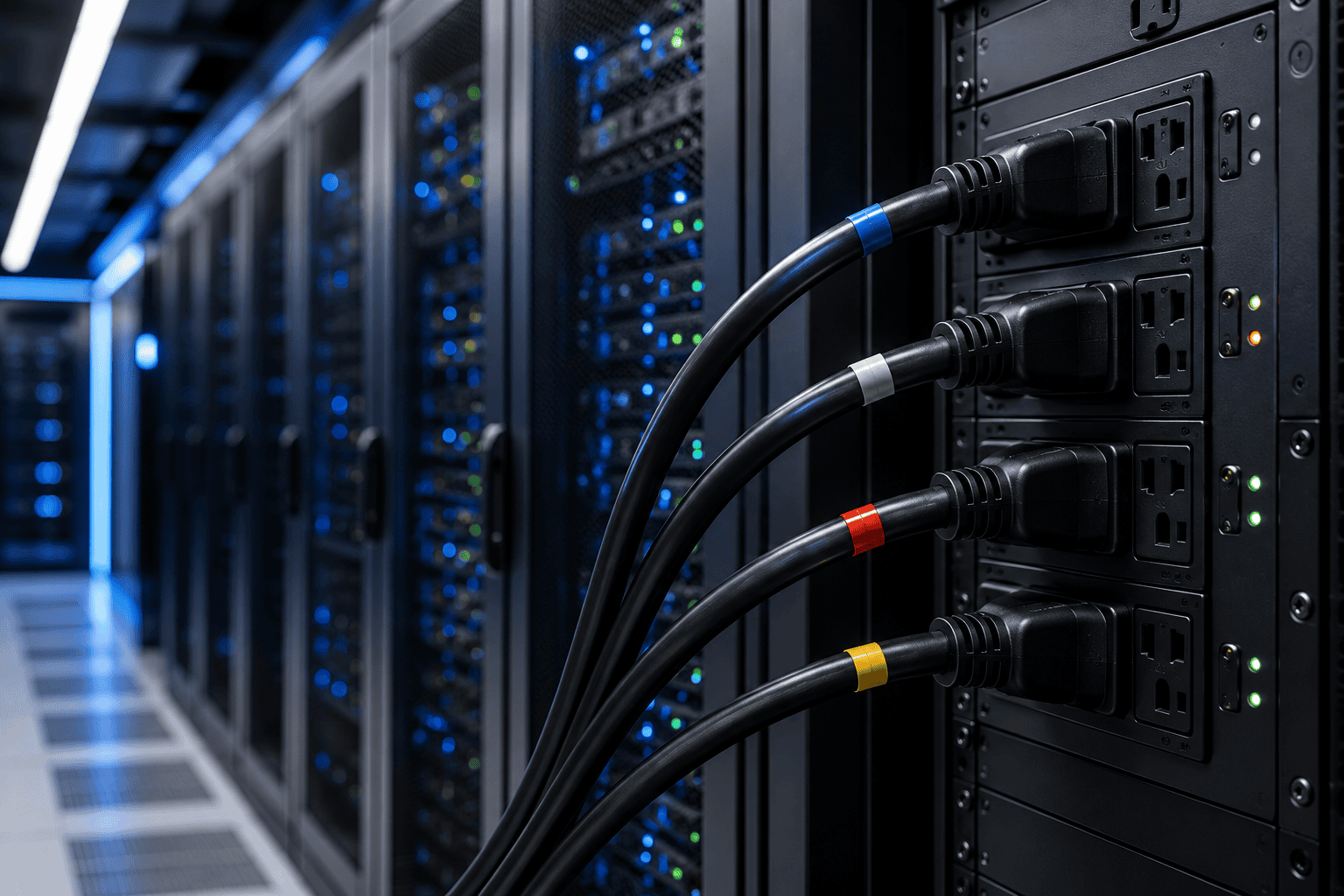
Data Center Power Whips: What They Are and Why They Matter
Learn how power whips support rack-level power distribution, scalable infrastructure, and faster data center deployment.Read Guide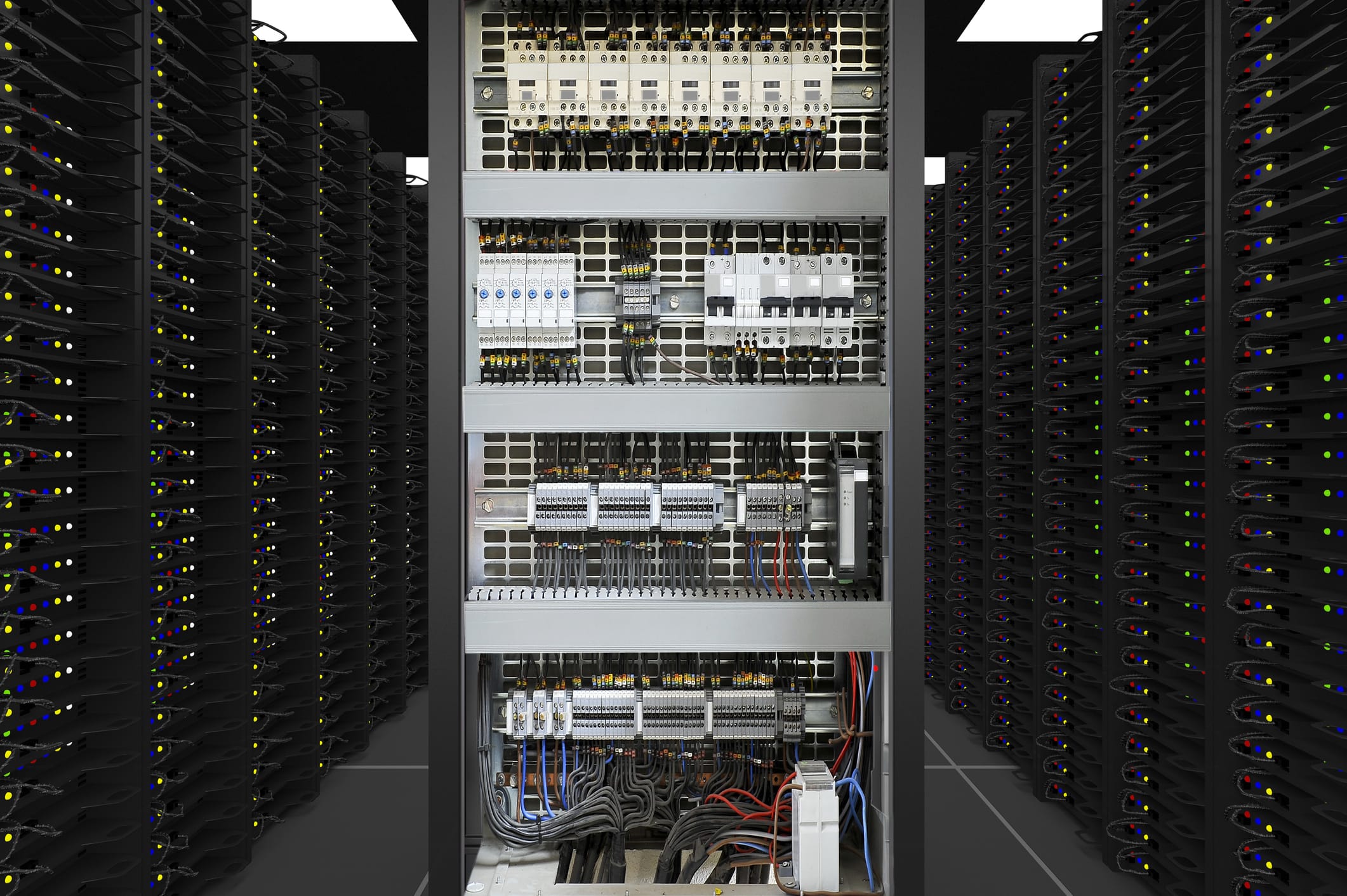
Choosing Data Center Power Cables
Explore key factors for selecting power cables for feeder circuits, rack-level distribution, PDUs, power whips, and high-density data center environments.Read GuideData Center Wiring Compliance Guide
Review standards, safety considerations, labeling, documentation, and installation practices for compliant data center cabling infrastructure.Read Guide